Chinese
 français
 Deutsch
 italiano
 español
 português
 Nederlands
 日本語
日本語 한국의
한국의




- Home
- >
- Glove Box
- >
- Custom Glove Box
- >
- Drying Room for Lithium-ion Battery Laboratory
Categories
Hot Products

Loading...
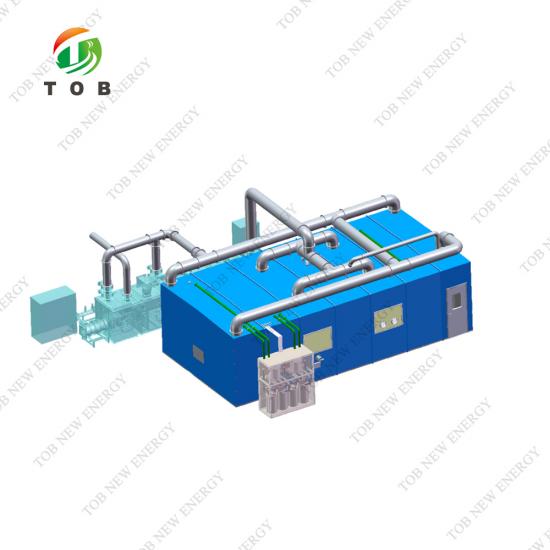
Drying Room for Lithium-ion Battery Laboratory
Brand:
TOB NEW ENERGYitem no.:
TOB-SDY-50order(moq):
1product origin:
Chinashipping port:
Xiamen
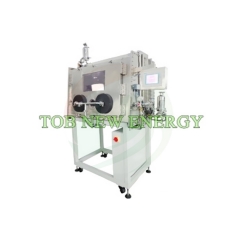
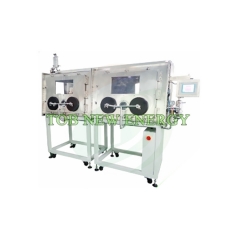
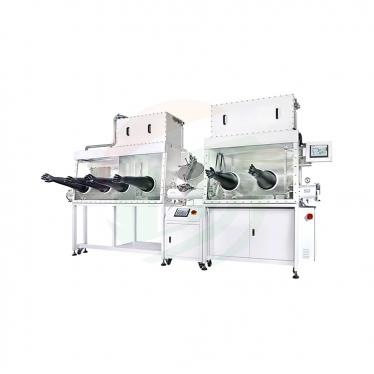
TOB-SDY-50 Sealed Drying Room with -60°C Dew Point for Lithium-Ion Battery Laboratory and R&D Environments
Product Overview and Ideal Applications
A sealed drying room is a controlled-environment enclosure that maintains extremely low humidity levels—often measured by dew point rather than relative humidity—for the safe handling, processing, and storage of moisture‑sensitive materials. In lithium‑ion battery research and pilot‑scale manufacturing, such an environment is essential whenever electrode materials, electrolytes, or assembled cells are exposed to ambient air. Moisture ingress during fabrication can degrade cathode powders, hydrolyse LiPF₆‑based electrolytes to form corrosive HF, and reduce the formation efficiency of the solid‑electrolyte interphase (SEI), ultimately compromising cell capacity and safety.
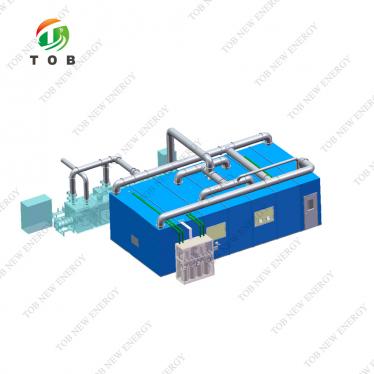
The TOB‑SDY‑50 is a fully integrated, sealed stainless‑steel drying room that combines a high‑efficiency rotary‑wheel dehumidifier, a water‑removal purification system, an air‑cooled or water‑cooled chiller, and a closed‑loop stainless‑steel air‑circulation network. Within 30 minutes of initial start‑up, the system achieves a dew point of –60 °C inside the working enclosure—equivalent to a moisture content of less than 10 ppm at room temperature. In idle mode, the moisture level is continuously held below 50 ppm, and the unit can reduce energy consumption by up to 90 % compared to full‑power operation. These capabilities make the TOB‑SDY‑50 an economical, reliable alternative to a full‑scale dry room for laboratories, pilot lines, and small‑volume production that nonetheless require the same stringent atmospheric control.
Ideal for:
- Lithium‑ion battery R&D laboratories handling high‑nickel cathode materials (NMC811, NCA), sulfide solid electrolytes, or lithium‑metal anodes that demand a dew point of –40 °C or lower.
- Small‑scale production or pilot lines that assemble pouch or prismatic cells under dry conditions, including electrolyte filling, sealing, and formation.
- Research groups that previously relied on glove boxes but need a larger working volume for equipment such as manual presses, ultrasonic welders, or small coaters.
- Any facility that handles moisture‑sensitive pharmaceuticals, semiconductor materials, or optical components under similar atmospheric constraints.
Where Drying Rooms Fit in Lithium‑Ion Battery Manufacturing
The manufacturing chain for a lithium‑ion cell can be divided into two distinct environments: the ambient‑humidity zone (slurry mixing, coating, calendaring) and the dry zone (all steps after the electrode is dried that involve the electrolyte or sensitive anode surface). A drying room is the core of the dry zone. It typically houses:
- Electrode drying and storage: Although coated electrodes are dried in line, they often require post‑drying under vacuum or in a dry environment before cell assembly to remove residual moisture.
- Cell assembly: Stacking or winding of electrodes into jelly‑rolls or pouches is performed in a dry environment to prevent moisture from adsorbing onto the electrode surfaces and the separator.
- Electrolyte filling and wetting: Liquid electrolytes, especially those containing LiPF₆, must be dispensed in a dry atmosphere to prevent the formation of HF.
- Cell sealing: Final heat‑sealing or crimping of the cell housing is performed under dry conditions to encapsulate the sensitive internal components.
Key advantages over a traditional dry room:
The manufacturer highlights several systemic benefits that directly address the practical limitations of older dry‑room designs:
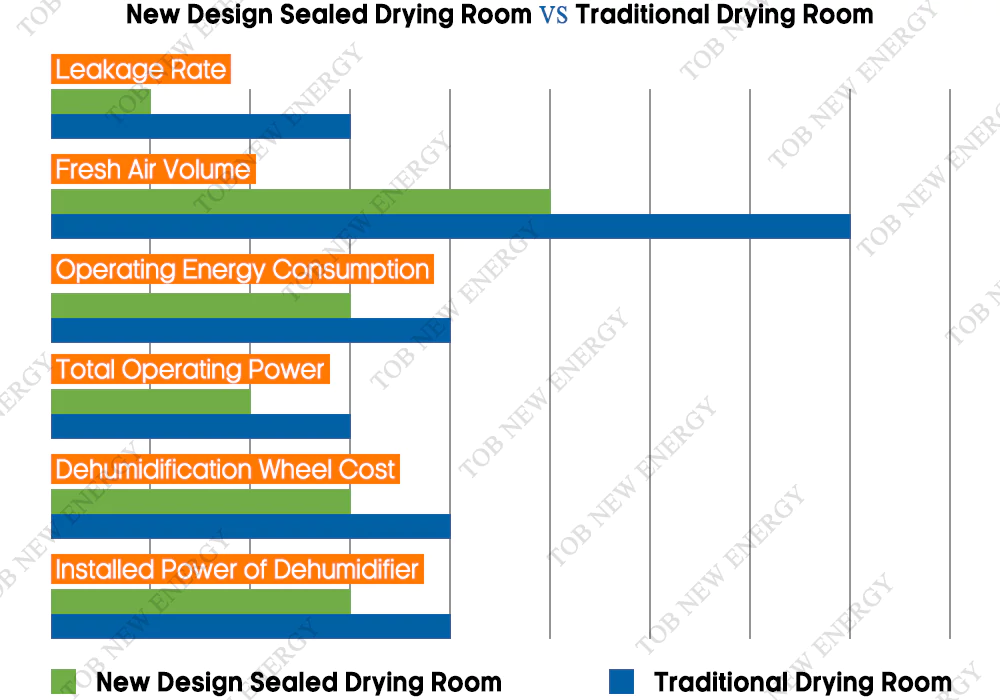
- Lower leakage rate: The sealed stainless‑steel box with gasketed doors and a buffer compartment minimises the ingress of ambient moisture, so the dehumidifier works against a smaller latent load.
- Reduced fresh‑air make‑up: Because the enclosure is tightly sealed, the dehumidifier mostly recirculates and polishes the internal air rather than continuously treating large volumes of outside air. This significantly reduces the energy required to bring incoming air to the target dew point.
- Lower operating energy consumption: The combination of low leakage and low fresh‑air demand translates into a direct energy saving of 50 % under normal working conditions and over 90 % when the room is idle (e.g., overnight or weekends).
These three factors—leakage rate, fresh‑air load, and energy use—are the primary drivers of the total cost of ownership for any drying facility. The TOB‑SDY‑50 directly addresses each one, making it an economically viable solution for long‑term operation in a university or industrial laboratory.
How the Integrated Drying System Works
The TOB‑SDY‑50 creates and maintains its ultra‑dry environment through a multi‑stage, closed‑loop air‑handling system. The major components, as specified by the manufacturer, are:
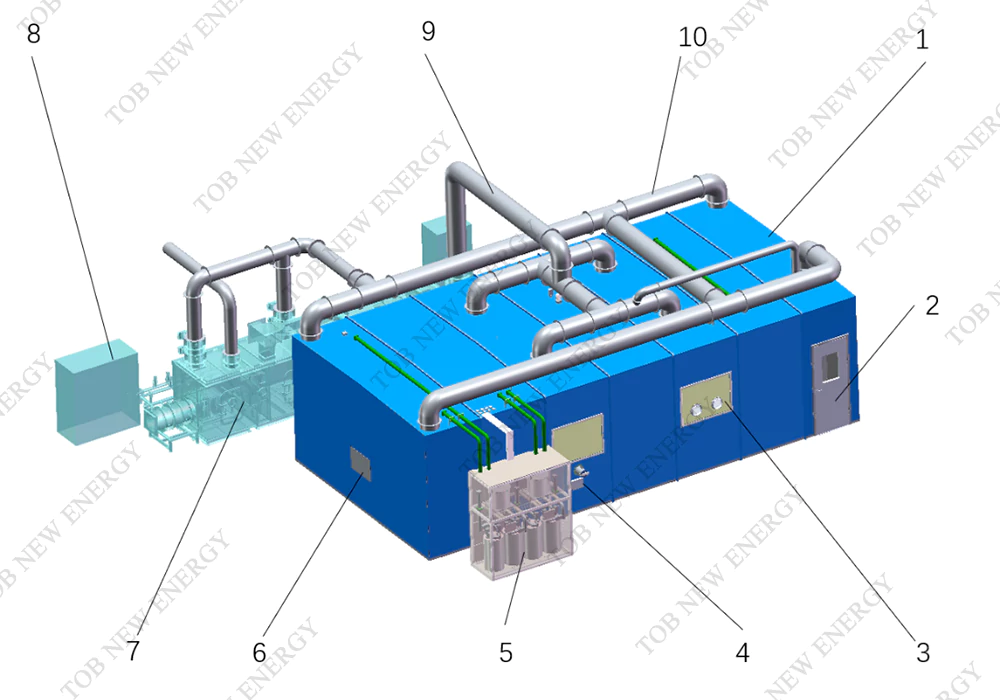
| No. | 1 | 2 | 3 | 4 | 5 | 6 | 7 | 8 | 9 | 10 |
| Component | Sealed stainless‑steel box | Buffer compartment door | Observation window | Tool transfer small chamber | Water removal purification system | Material transfer channel interface | Rotating wheel dehumidifier unit | Air‑cooling / water‑cooling chiller unit | Air inlet pipeline | Air return pipeline |
Air circulation and drying cycle:
- Return air: Moisture‑laden air from the sealed box is drawn through the air‑return pipeline (10) into the dehumidifier unit (7).
- Rotary‑wheel dehumidification: The heart of the system is a desiccant wheel—a slowly rotating honeycomb matrix impregnated with a highly hygroscopic material (typically silica gel or a molecular sieve). As the return air passes through one sector of the wheel, moisture is adsorbed, and the air exits dry and slightly warm due to the heat of adsorption. Meanwhile, a smaller, heated regeneration air stream passes through another sector of the wheel, driving off the captured moisture to the outside.
- Water removal purification (5): After the primary dehumidification, the air passes through a water‑removal purification unit that may include a secondary desiccant bed, a molecular sieve, or a refrigerated coil to further reduce the dew point. This stage is critical for achieving the –60 °C dew point specification.
- Cooling (8): The drying process generates heat (from the regeneration heater and the adsorption enthalpy), so the dried air is passed through an air‑cooled or water‑cooled chiller unit to bring it back to the desired working temperature (typically 20–25 °C) before it re‑enters the box.
- Supply air: The cooled, dried air is returned to the sealed box through the air‑inlet pipeline (9), completing the loop.
Atmospheric integrity:
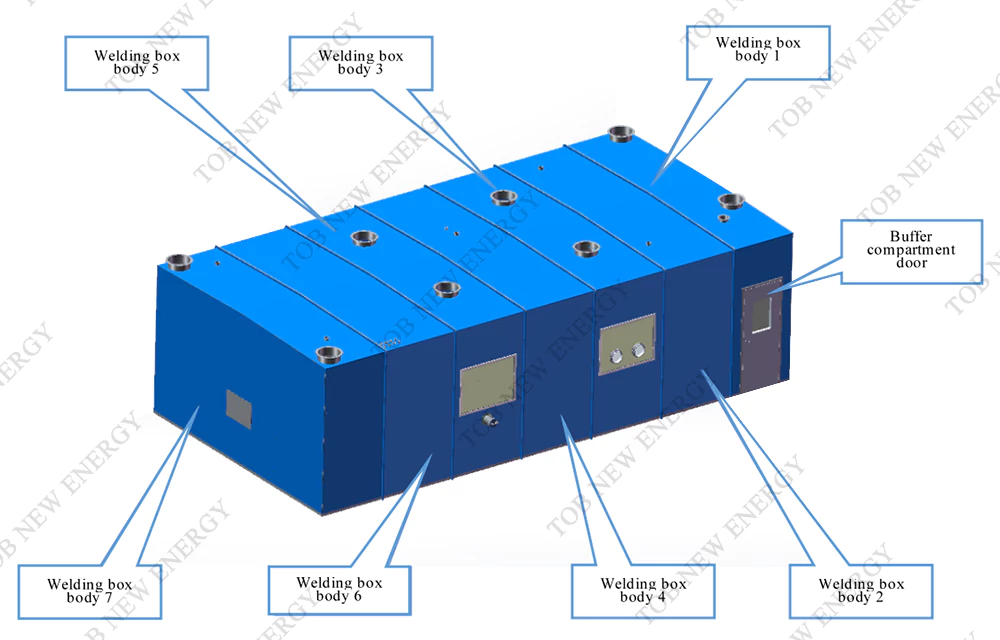
The sealed stainless‑steel box (1) is the physical barrier that isolates the working environment from the ambient laboratory. Personnel enter through a buffer compartment door (2)—a small chamber with interlocking doors that minimises the volume of moist air admitted. Tools and small items are passed through a dedicated transfer chamber (4), while larger materials enter through a material transfer channel interface (6). An observation window (3) allows the operator to monitor processes inside without opening the main door.
Performance specification (as stated by the manufacturer):
- 30 minutes after initial operation, the dew point in the box can reach –60 °C.
- In idle condition, the water content in the box is maintained below 50 ppm.
- Energy saving reaches 50 % under normal working conditions, and more than 90 % in idle conditions.
These numbers define the core capability of the TOB‑SDY‑50. The rapid initial pull‑down means the room can be started at the beginning of a shift and be ready for use within half an hour. The low idle moisture level ensures that experimental materials stored overnight in the room do not degrade, even if no active work is being performed. The energy‑saving figures directly impact the operating budget, especially important for university laboratories where funding for ongoing facility costs may be limited.
 |
 |
Engineering FAQ — Sealed Drying Room for Battery R&D
Q1: How often does the desiccant wheel need to be replaced, and what is the typical lifetime?
The rotary desiccant wheel is a robust, continuous‑duty component. Under normal laboratory operation (8–12 hours/day), the wheel can last 5–8 years before the desiccant material gradually loses adsorptive capacity due to contamination or thermal cycling. Annual inspection of the regeneration heater and the wheel drive motor is recommended. If the dew‑point specification can no longer be met, TOB can supply a replacement wheel.
Q2: Can the room be operated continuously at –60 °C dew point, or is this just a peak performance figure?
The –60 °C dew point is achievable and can be maintained indefinitely as long as the moisture load (operator entry, material introduced) does not exceed the dehumidifier’s capacity. In practice, if the room is heavily used with frequent door openings, the dew point will cycle between approximately –50 °C and –60 °C. The 50‑ppm idle specification is the true steady‑state maintenance level.
Q3: What utilities are required to operate the TOB‑SDY‑50?
The system requires an electrical supply (voltage and power to be confirmed per the specific configuration), and depending on the chiller option, either ambient air (air‑cooled chiller) or a connection to an external cooling‑water circuit (water‑cooled chiller). No liquid nitrogen or compressed dry air supply is needed, because the dehumidifier generates its own dry air from the ambient.
Q4: Can the room be used for handling sulfide‑based solid electrolytes that react with moisture to form H₂S?
The –60 °C dew point environment has a moisture concentration of approximately 5–10 ppm, which is sufficiently low that sulfide electrolytes can be handled for extended periods without significant H₂S generation. However, the room must be equipped with an H₂S sensor and appropriate exhaust ventilation if these materials are to be processed regularly. The sealed box can be adapted to operate under a slight nitrogen over‑pressure to further ensure an inert environment. Contact TOB for customisation requirements.
Ready to equip your battery laboratory with a cost‑effective, energy‑efficient, and high‑performance drying environment? Contact our clean‑air engineering department for a detailed system quotation based on your internal equipment layout and target dew‑point specification.
tob.amy@tobmachine.com | +86 181 2071 5609
You May Also Need
- Single Station Series Vacuum Glove Box - A benchtop‑scale controlled‑atmosphere enclosure for handling moisture‑sensitive materials. Ideal for coin‑cell assembly and small‑scale electrode processing where a full drying room is not required, or as a supplementary workstation for tasks needing an inert gas environment.
- Solid‑State Battery Equipment- Explore TOB’s complete range of equipment for solid‑state battery research and pilot production—from powder synthesis and electrolyte processing to cell assembly and testing. Integrates seamlessly with drying rooms to create a full production environment.
Previous:
Double-position customized glove boxNext:
High-performance Butyl Rubber Gloves for Glove Box
If you are interested in our products and want to know more details,please leave a message here,we will reply you as soon as we can.



 subscribe to us